Best Safari Luggage: What Bag to Bring on Safari?

Choosing the right luggage for a safari is surprisingly important — and often more confusing than travellers expect. Strict weight limits, small-plane baggage rules, and the need for soft-sided bags mean that your usual suitcase may not be suitable for flying between safari locations.
As a former luxury travel advisor with experience designing safari itineraries, and having travelled to Kenya and Zambia myself, I’ve helped many travellers navigate these exact luggage restrictions. I also experienced them first-hand when flying on Safarilink and Air Kenya, where bags were measured, weighed, and packed tightly into small aircraft compartments.
In this guide, I’ll explain the real safari luggage rules, including airline weight limits, soft-sided bag requirements, and what happens if you bring the wrong suitcase. You’ll also find practical advice on choosing the right duffel bag, plus storage options if you’re combining your safari with a longer trip in East Africa.
This article focuses specifically on safari luggage — the type of bag you need, the dimensions that work, and how to meet the restrictions with minimal stress.
If you need help with what to pack, you can find that in my Safari Packing List and What to Wear on Safari guide.

Quick Safari Luggage Recommendations
If you’re short on time, here are the safari bags I recommend most often — based on my own safari experience and what works reliably on small aircraft like Safarilink and Air Kenya.
Best Overall Safari Duffle: Osprey Daylite Duffel 45L – Lightweight, flexible, and compresses easily into safari aircraft holds. I used this on my Kenya safari and it was great.
Check price on Amazon | Check price on Osprey
Best Durable Duffle (Rain & Dust Resistant): The North Face Base Camp Duffle (Small) – Extremely tough material, comfortable straps, and ideal size for safari flights.
Check price on The North Face | Check price on Amazon
1. Understanding Safari Luggage Restrictions

Packing for a safari is very different from packing for a standard holiday. The biggest reason? Small safari aircraft have extremely limited space, and luggage must fit into narrow, flexible storage compartments. Because of this, airlines enforce strict rules on weight, dimensions and bag type.
From my experience flying Safarilink and Air Kenya — and after planning many safaris for clients — the rules are strict but manageable as long as you prepare properly.
Why Safari Flights Have Strict Luggage Limits
Safari planes are small, often carrying between 8–15 passengers. Bags are loaded into compact cargo pods that can only fit soft, flexible duffels. Hard cases simply don’t bend or compress enough to fit safely, which is why they are refused at check-in.
Weight limits are equally important. Excess weight affects the plane’s performance, so even a few extra kilos matter.
Safari Airline Allowances

While allowances vary a little, most safari airlines follow very similar rules:
Safarilink
- Total allowance: 15 kg per person (checked + hand luggage combined)
- Bags must be soft-sided
- Maximum dimensions: 60 cm x 45 cm x 30 cm
Air Kenya
- Total allowance: 15 kg per person
- Checked bags must be soft-sided
- Max size: 60 cm x 45 cm x 33 cm
- Hand luggage must be included within the 15 kg and kept under 5 kg
Some airlines will allow extra weight for an additional fee, but this isn’t guaranteed — especially on full flights.
When flying from Nairobi Wilson Airport, our family’s duffels were weighed together, meaning we could balance out a slightly heavier bag with a lighter one. However, this depends on the staff on the day, so it’s best not to rely on it.
Why You Must Use a Soft-Sided Bag
Soft duffel bags are required because they:
- Compress into the small compartments on safari aircraft
- Fit more easily into safari vehicles
- Are lighter and easier to handle on dirt airstrips
- Withstand dust and movement better than hard cases
Hard-shell suitcases, even carry-on ones, often cannot be accepted on safari flights and if they are accepted, they may be transported separately at your own risk.
How Weight and Dimensions Are Checked
Airline staff will typically:
- Weigh your entire luggage allowance together
- Check that your bag compresses properly
- Examine the material to ensure it is genuinely soft-sided
- Measure oversized bags if they appear borderline
If your bag is too rigid or too large, it may be refused — leaving you the option to repack on the airport floor or pay for additional handling.
2. Best Type of Bag for Safari
Choosing the right bag is one of the most important parts of preparing for a safari. Even if you are used to travelling with wheeled suitcases, safari flights and vehicles require luggage that is flexible, lightweight and easy to handle on dirt airstrips.
Having planned safaris for clients and experienced multiple safari flights myself, the type of bag that consistently works best is a soft-sided duffle. It adapts to aircraft storage, fits in safari vehicles, and is far easier for lodge staff to manage when transferring baggage between planes and jeeps.
Why Soft-Sided Duffels Work Best

Soft duffle bags are preferred on safari for several reasons. They compress into small aircraft compartments, unlike hard-shell suitcases, which cannot bend and often cannot be loaded at all. They are also safer for other passengers, as luggage areas on small planes are tightly stacked and hard cases can shift during takeoff and landing.
In safari jeeps, soft bags are easier to fit behind the seats or at the back of the vehicle. They also tend to withstand dust and rough handling better, as the fabric flexes rather than cracks.
- Recommended Luggage: Osprey Daylite Duffel 45 L
Features to Look For in a Safari Bag
A good safari bag doesn’t need to be expensive or high-tech, but certain features make travel significantly easier:
- Soft-sided material that can compress
- Lightweight construction to keep you under the 15 kg allowance
- Minimal or no rigid structure
- Strong zippers that can handle dust and daily use
- A shape that fits within typical safari bag dimensions
- Backpack or shoulder straps for easier carrying on dirt airstrips
A simple, durable duffle is more practical for safari travel than a premium suitcase with wheels. Wheels add unnecessary weight and take up valuable space inside the aircraft cargo pod.
Can You Bring a Wheeled Suitcase on Safari?

Most safari airlines recommend avoiding wheeled cases altogether. A few will accept small wheeled duffles, as long as the wheels are soft and the bag can still compress into the required dimensions.
Hard-sided rollers and rigid carry-ons are typically refused or transported separately at your own risk.
If you are travelling to Africa for several weeks and need more space, you can still bring a wheeled suitcase for the rest of your trip. However, it should be stored at the airport or your hotel in Nairobi during the safari portion.
This approach works particularly well if your safari is only part of a longer itinerary that includes city stays, beaches or wine regions.
Best Size and Shape for Safari Bags
Most safari duffles fall into the 40–60 litre range. This size holds everything you need for a multi-day safari while still compressing to fit airline restrictions. The shape should be flexible, without a rigid frame, and ideally rectangular or cylindrical for easy stacking.
If you already own a soft-sided duffle that meets airline size and weight rules, you may not need to buy anything new. The best safari bag is simply one that is flexible, lightweight and durable enough to handle the trip.
3. Best Safari Bags (Product Recommendations)
Choosing the right safari duffle bag is essential when flying with airlines like Safarilink or Air Kenya. Their strict size and weight limits mean your bag needs to be flexible, lightweight, and durable enough to handle dust, soft aircraft holds, and quick transfers between lodges.
Over the years, I’ve tested a few different duffle bags and also paid close attention to what other guests were using on safari flights. The bags below all meet typical safari luggage requirements and have held up well in real travel conditions.
Where possible, I’ve included links to both the brand website and Amazon so you can compare prices and shipping options in your region.
When I travelled on Safarilink for my Samburu and Masai Mara safari, I spent a long time researching a soft-sided bag that would reliably fit into the aircraft storage. These are the bags I recommend based on personal use and what I saw other safari guests carrying.
If you’re unsure where to start, the Osprey Daylite Duffle 45L and The North Face Base Camp Duffle (Small) are the two I’ve seen work best on safari flights.
Osprey Daylite Duffle 45L
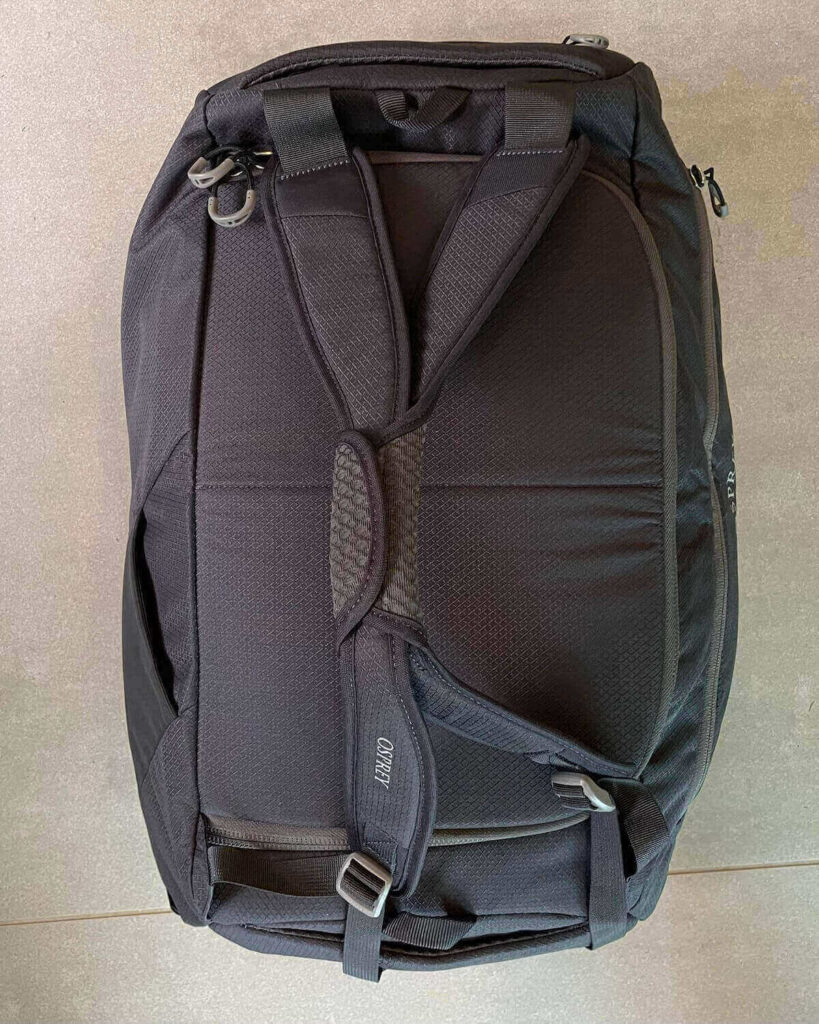
Dimensions: 53cm x 36cm x 24cm
This is the duffle I personally used in Kenya, and it was the ideal safari bag. Although the dimensions are slightly larger than the guideline issued by my safari company, the soft sides compress easily as long as you don’t overfill it.
I found the compartments very practical, and the option to carry it as a backpack or a holdall made airport transfers effortless. I continue to use this bag for weekend trips because of how versatile it is.
You can check the latest price and colour options here:
North Face Base Camp Duffle – Small
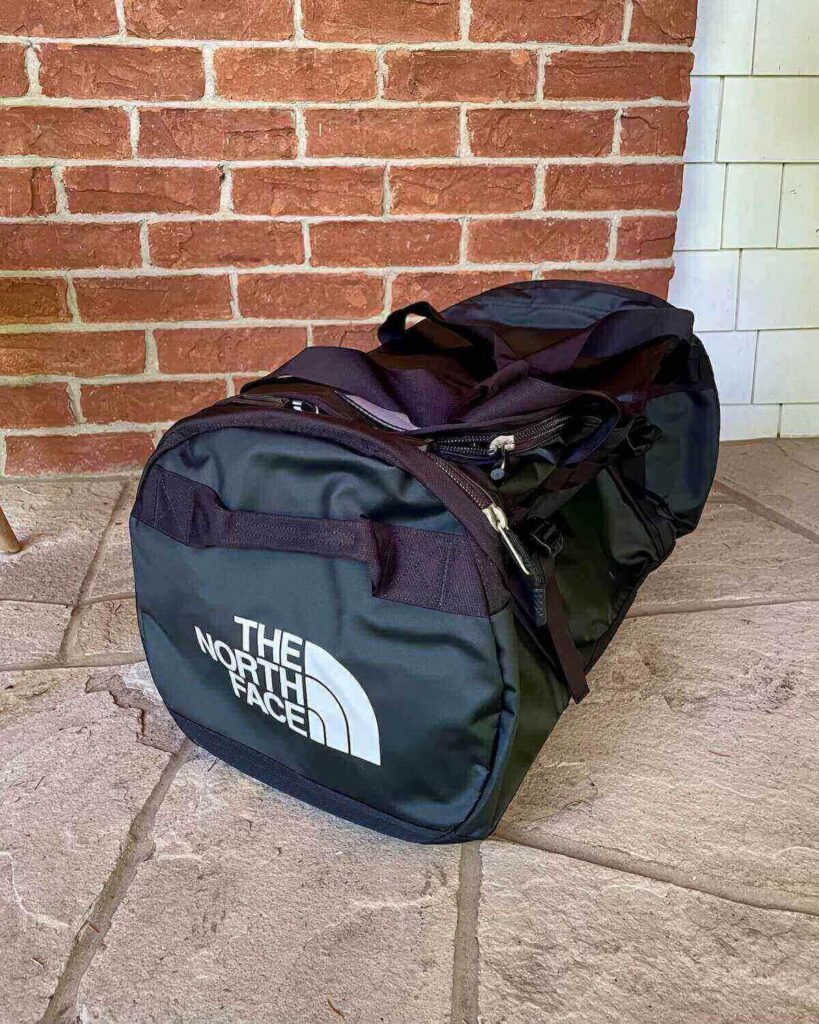
Dimensions: 33cm x 53cm x 33cm
I already owned this duffle in medium and large, but those sizes are too big for safari flights. The small version, however, fits well within Safarilink and Air Kenya guidelines.
The waterproof material handles dust and rough surfaces, the straps make it easy to carry as a backpack, and the zips are incredibly sturdy. We have stuffed this bag full when moving countries, and it has never failed.
You can check the latest deals here:
Patagonia Black Hole Duffle 40L or 55 L
Dimensions: 57.9 x 33.8 x 24.1 cm
The Patagonia Black Hole is one of the most common bags I saw people carrying around Kenya and Zambia. Both the 40L and 55L versions work well for safari flights.
The material is tough, water-resistant, and easy to wipe down — ideal for dusty airstrips and lodge transfers. It also converts into a backpack and has plenty of pockets to keep items organised.
You can check all the offers here:
Lifeventure Packable Duffle 70L

Dimensions: 18 x 22 x 50 cm
This is a low-cost duffle that packs down small and can fit inside another suitcase when empty. It’s a good option if you want something budget-friendly that can still be compressed for safari aircraft.
The trade-off is that the material is much thinner and not as water-resistant. My dad travelled with this bag and found it adequate for safari, but not a premium option.
The newer Expedition Cargo Duffle has a more structured material and is actually priced lower, so I would recommend choosing that version.
Find out the latest prices and version here:
- Check price for Expedition Cargo Duffle on Amazon
- Check price for Expedition Cargo Duffle on Lifeventure
If you need help with what items to bring, check out my safari packing list for equipment and my safari clothing packing list.
If you’re unsure which duffle to choose, I’d personally pick the Osprey Daylite Duffle 45L as I am very happy with it as a safari bag. It strikes the best balance between size, weight and flexibility for safari flights, and I still use it regularly for weekend trips.
If you already own a North Face Base Camp or Patagonia Black Hole in the smaller sizes, those work well too given their sturdy material.
4. How to Pack Your Safari Luggage
Packing for a safari is all about staying within strict airline limits while making sure your essentials remain easy to access. From flying Safarilink and Air Kenya myself, I found that being organised early makes a huge difference at check-in and during the early morning game drives.
Use Packing Cubes

Packing cubes are especially useful on safari, where storage space in tents and lodges is often limited. They act like mini drawers and make it easy to find items quickly before early game drives. Group similar items together — for example, shirts in one cube, trousers in another.
If your safari is part of a longer itinerary, keep one cube just for safari clothing and one for the rest of your trip. That way you can repack quickly when returning to Nairobi or continuing onward.
Some good options to compare:
- Packing cubes on Amazon – plenty of colour choices, quick delivery and highly-rated
- Packing cubes from Calpak – I own these and I love the design, plus they have functioned well for me for any years
- Packing cubes from Osprey – great if you already use their luggage
Keep Your System Simple
Because safari airlines weigh your checked and hand luggage together, the best approach is to lay out everything in advance and prioritise what you actually need for the safari portion of your trip.
If you’re continuing to other destinations afterwards, pack non-safari items separately so they can be stored at Nairobi Wilson Airport.
Rolling clothes rather than folding can help you maximise the space inside a soft-sided duffle, which naturally has less structure.
What to Put in Hand Luggage
Although you’re allowed hand luggage, it still counts toward your 15 kg total, so keep this bag light and focused on items you want to keep close:
- Camera gear
- Travel documents
- Medications
- Sunscreen or repellent
- A warm layer for early flights
Because safari aircraft have limited storage, hand luggage should also be soft-sided where possible.
Useful Luggage Accessories for Safari

A few small extras can make your safari travel days easier and help protect your belongings:
- Packing cubes – keep clothes organised and easy to grab before early game drives.
- Luggage tags – essential if you’re storing a suitcase at the airport or hotel during your safari.
- TSA-approved locks – useful if you’re leaving a hard-shell suitcase in storage in Nairobi.
- AirTags – helpful peace of mind if you’re leaving bags in storage.
I always place an AirTag inside my suitcase; it has been helpful more than once, including when my luggage was misplaced in Toronto over Christmas.
If you’re combining your safari with other destinations such as Nairobi, Zanzibar or South Africa, a hard-shell suitcase works well for the non-safari portion of your trip. I use the Herschel trolley bag because it has built-in TSA locks and is durable enough for long-haul travel.
If you prefer not to store luggage at the airport, some travellers choose to leave large suitcases at their Nairobi hotel instead, then collect them after the safari. This is usually easy if you are returning to the same hotel before your flight home.
5. Luggage Storage During a Safari

If your safari includes flights on Safarilink or Air Kenya, you will likely need to store any hard-sided suitcases or excess luggage before boarding your light aircraft.
Both airlines offer complimentary luggage storage at Nairobi Wilson Airport, which is convenient if you’re combining your safari with additional destinations before or after.
Many travellers bring two bags to Africa:
- a soft-sided duffle for the safari portion, which meets the strict aircraft requirements
- a larger wheeled suitcase for the rest of their trip, which is left securely in storage
This setup works especially well if your itinerary includes multiple destinations such as Masai Mara, Serengeti, Nairobi, Zanzibar, or South Africa — places where you may need more clothing or different gear.
6. Requirements of a Safari Bag

Before buying a new duffle bag, check whether you already own something that fits the typical safari requirements. Most travellers don’t need a specialised bag — they simply need one that meets airline rules and works well in the rugged conditions you’ll encounter.
A suitable safari bag should meet the following criteria:
- Soft-sided construction: Safari aircraft have narrow luggage compartments, and hard-shell suitcases cannot be compressed to fit into these spaces. A soft-sided duffle is essential, and it should be able to squash down if you don’t overfill it.
- Lightweight materials: With a strict 15 kg allowance on most airlines (including hand luggage and camera gear), the bag itself should be as light as possible to leave room for your belongings.
- Easy to carry: Choose a duffle with comfortable shoulder straps or backpack-style straps. You’ll likely carry your bag through airports, onto small planes, and between safari vehicles and tents.
- Durable and dust-resistant: Safari bags pick up dust from landing strips, lodge vehicles and open-sided jeeps. Avoid delicate or “precious” bags. The material should be sturdy enough to withstand rough handling and easy to wipe clean afterwards.
- Simple design with practical compartments: Multiple zip pockets or side compartments help keep essentials organised without having to unpack everything in small tented rooms.
If your current duffle meets these points and is within the airline’s dimensions, you won’t need to purchase a new safari bag. Many travellers successfully use gym bags, camping duffles or older soft cases as long as they fit within the limits.
7. FAQ
Do safari airlines really check luggage size and weight?
Yes. Safari airlines in East Africa are strict because small aircraft have narrow luggage holds and limited weight capacity. Bags are weighed at the airport, and hand luggage is included in your total allowance. If your bag is too rigid or oversized, staff may require you to repack into a soft-sided duffle.
Can I bring a wheeled suitcase on a safari flight?
Not onto the safari aircraft. Hard-shell and wheeled suitcases usually don’t fit into the luggage pods.
However, you can travel with one internationally and leave it in secure storage at Nairobi Wilson Airport or at your hotel. Many travellers use a duffle for the safari and store their main suitcase until they return.
Do camera bags count towards the safari luggage limit?
Yes. Cameras, lenses, binoculars, drones and personal items all count toward your 15 kg allowance on Safarilink and Air Kenya. If your camera kit is heavy, consider using a lighter day bag and minimising non-essential items.
What happens if my luggage is over the 15 kg limit?
Some airlines allow you to purchase excess weight, but only if the aircraft has capacity. There is no guarantee. If the flight is full, you may be asked to leave items behind or re-pack into a smaller bag. To avoid issues, weigh your luggage before arrival.
Do safari bags need to be waterproof?
Not fully waterproof, but they should resist dust and light moisture. Safari airstrips and 4×4 vehicles are dusty, and bags often sit on the ground during loading.
What size bag do I need for safari?
Most safari airlines require a soft-sided duffle around 60 cm x 45 cm x 30 cm or smaller. A 40–55L duffle works well, as it can compress to fit into the small luggage holds on safari aircraft.
8. Conclusion – What is the Best Safari Travel Bag?

Choosing the right safari bag makes your trip far easier — especially when you’re navigating strict 15 kg weight limits, small aircraft, and dusty, rugged terrain. A soft-sided duffle is always the most reliable option because it fits into the narrow luggage holds on safari planes and can be compressed when needed.
My top two choices are:
- The North Face Base Camp Duffle in Small – Known for its waterproof material, ample storage space, and multiple compartments for easy organisation. Its padded shoulder straps make it comfortable to carry, whether you are navigating airports or transferring between safari lodges.
- Osprey Daylite Duffle 45L – A great lightweight option with multiple carrying styles, including backpack straps for added versatility. Its durable construction and well-designed compartments make it an excellent choice for safari travel.
Both bags work well for travellers visiting Kenya, Tanzania, Zambia or any safari destination where soft-sided luggage is essential.
If you’re planning a safari and want help with the next steps, these guides will support your packing, clothing choices and logistics:
- What to Wear on a Safari in Kenya (clothing + colours to avoid)
- What to Pack for a Safari in Kenya (full gear checklist)
- A Typical Day on Safari in Kenya (what to expect on game drives)
- How To Make the Most of One Day in Nairobi, Kenya?
- What Is It Really Like Staying at Giraffe Manor?
- Can You Visit Giraffe Manor Without Staying There?
- Is a Nairobi National Park Tour Worth it?
- Where to Stay in Nairobi, Kenya?
- Nairobi Airport Services: Meet and Assist – Is it Worth it?
These articles work together to give you a complete, practical understanding of safari travel — from your luggage to your daily schedule — so you can feel prepared and confident before you go.
Enjoyed what you read? Sign up to receive an email whenever I publish a new travel guide.