What You Need on Your Packing List for a Safari in Kenya

Safari travel is supposed to be exhilarating, breathtaking, and unforgettable. However, if it is your first safari experience, it can also be stressful beforehand . There will be an overwhelming number of items on your packing list for safari in Kenya.
This article on what to pack for Kenya safaris will give you all the information you need to know. You will learn some very important items to pack for a safari in Kenya, such as documents, cash and toiletries.
I went on safari to Kenya in October 2022, which means I can share with you all of my learned experiences on what to pack for safaris. In addition, I also gathered information online, from my safari organisers, plus from safari expert’s presentations working as a luxury travel consultant.

Kenya Safari Packing List
Plastic bags are forbidden in Kenya. If an airport official searches your bag and finds any, the bags will be confiscated. Therefore, you should ensure you do not bring any into the country.
You will need to find alternative options for the items that you would usually pack in plastic bags.
Read on to find out what to bring on safari in Kenya.
Game Drive Essentials

Here are a few items you will need to bring while on game drives.
If a Nairobi National Park tour comes near the start of your trip, use it as a trial run for the rest of your safari. Pack the day bag you intend to take on later game drives, check that your camera and spare batteries are easy to reach, and practise changing settings or using your zoom before you reach the larger reserves.
First-time safari guests may also find it helpful to understand what happens during a typical safari day, including early starts, game drives and time back at camp.
Day Bag
Bring a bag you can use for the game drives and for sightseeing. You may find it useful to bring a separate bag to your travel hand baggage to keep your other items contained.
You may also need a soft-sided main bag if your itinerary includes light-aircraft flights, so check the safari luggage requirements before choosing your suitcase.
- Osprey Ultralight Stuff Pack – the best day bag for safaris
Binoculars
Do not bring low-end binoculars because they are no better than your eyes. If you plan to purchase a pair, make sure they are a premium brand.
- Nikon Aculon A211 8×42
- Olympus 8×42 EXPSI BINOCULAR
- Bushnell – Legacy – 10×50
- Pentax SD 8×42 WP Binoculars
Mirrorless Camera
Camera Lens
I highly recommend renting a lens if you do not own one with a good zoom.
Hand Sanitiser
Pack a small bottle of hand sanitiser in your game-drive bag, as toilet facilities can be basic. The bathrooms I used at Nairobi National Park were in poor condition, so if you visit the park in the morning as part of a one-day Nairobi itinerary, you may prefer to wait and use the facilities at a later stop when possible.
Bandana
It can get pretty dusty on a game drive, particularly in locations with a dry climate. In Samburu we needed to wear bandanas across out nose and mouths when we were driving at speed in the along dusty roads.
Sunglasses
I bought a lanyard to wear my sunglasses around my neck and it was so handy when I wanted to take my glasses off quickly to take a photo on the camera.
Night Vision Binoculars
You may consider investing in a pair of binoculars specifically for night use. The hotel manager at Sala’s Camp showed us his pair of night vision goggles and it was incredible what animals you can see across the valley.
Plastic Bag Alternatives

- Wash bags for toiletries – you cannot use zip-lock bags to carry your toiletries, even the ones provided in your home airport security for your hand luggage.
- Shoe bags – place your shoes in reusable bags to prevent your dirty shoes from touching your clothes.
- Laundry bags – bring eco-friendly bags to store and separate your used clothes and laundry.
- Reusable silicone food bags – these work well for liquids that may be at risk of leaking.
Toiletries

When packing for safari in Kenya, toiletries are some of the most essential items on your list.
It is best to have a wide range of medicines and toiletries to cover all scenarios. I used almost all the toiletries that I packed.
- Imodium or anti-diarrhoea tablets – it is quite common to get an upset stomach from water usage or your malaria tablets
- Antihistamine – if your bites usually swell up, ensure you get strong tablets. Benadryl in US/Canada or Piriton or Allevia in the UK
- Rehydration sachets or electrolytes tablets – these are essential and will help to prevent you from getting dehydrated or heat-stroke on a hot day on game drives.
- HIGH5 ZERO Electrolyte Tablets – blackcurrant is the best flavour – I drink it on a regular basis! (Available in the UK)
- SIS Electrolyte Tablets – best flavour is strawberry and lime or pink grapefruit. (Available in the UK)
- Nuun Sport Electrolyte Tablets – best flavour is grape (Available in USA & Canada)
- Insect repellent (minimum 30% DEET)
- OFF! Deep Woods Insect Repellent Aerosol (Available in USA & Canada)
- Jungle Formula Maximum Insect Repellent Spray with DEET (Available in UK)
- Manual toothbrush (electric versions may run out of charge)
- Hand sanitiser (for after going to a bush toilet on a game drive)
- Antiseptic ointment – Savlon for the UK or Polysporin/Neosporin for Canada/US
- Non-drowsy motion sickness tablets – for the small planes
- Paracetamol/ibuprofen – you never know if you will feel unwell, so it is best to come prepared
- Toiletries to wash your face, moisturise it and suncream
What to Bring on Safari for Malaria Prevention?
- Long-sleeved clothes (jacket or long-sleeve shirt, trousers, and long socks for evening meals)
- Mosquito repellent – lotion or spray
- Malaria tablets – you will need to see a travel clinic for this
- Avoid scented moisturisers and perfumes
- Some malaria tablets can give you side effects, such as vivid dreams, upset stomach, and headaches, but they are still worth taking.
See my safari clothing guide for suitable long-sleeved layers and evening outfits.
What Camera to Take on Safari?

The question of what camera to bring on Safari depends on what camera you already own. If you have a DSLR or mirrorless camera, then you should bring it. These cameras will take superior photos than your mobile phone will.
If you do not own a more advanced camera, I would wholeheartedly recommend getting hold of one – whether you buy, rent, or borrow one from a friend. You will see the difference in the quality of photos from your phone easily – especially if you have a decent lens to use with it.
I particularly noticed this when photographing the orphaned elephants at Sheldrick Wildlife Trust.
I relied on my phone during the visit, but I was disappointed with many of the photos and wished I had brought my better camera. The elephants do not remain still or pose at an ideal distance, so a camera with a useful zoom gives you more flexibility.
When choosing between a DSLR or a mirrorless camera, a mirrorless camera is the better choice for a Kenyan safari.
Mirrorless cameras are physically smaller, so they take up less space in your hand luggage and they are much lighter. But the image quality between the cameras is similar.
I borrowed a Nikon D700 (DSLR camera) and rented a Nikon AF-S 28-300mm f/3.5-5.6 lens. If you are unfamiliar with lenses and you would like to rent one, you should contact a lens rental company because they will tell you what lens is compatible with your camera.
The Nikon D700 that I used was heavy and bulky, which was not ideal due to my limited baggage allowance. Additionally, wearing the Nikon D700 camera was a strain on my neck while I took photos of animals on game drives.

However, the benefit of a DSLR camera is that it can be more affordable than a mirrorless camera. Plus, I was grateful to be able to borrow a high-quality camera for my safari in Kenya.
Therefore, if you can choose what camera to bring on safari, I would suggest bringing a mirrorless camera with a decent lens. Aim for a lens with a 300mm focal length. This option will give you good enough zoom to capture pictures of animals slightly further away.
If you are looking to purchase a camera, I would recommend buying the Fujifilm X-T30 II. It is a light and portable camera and still takes incredible pictures.
Electronics

I suggest adding the following electronics to your safari packing list for Kenya.
- Memory cards with sufficient space for anticipated photos – I brought memory cards with me with 32 GB and 16 GB of space and took around 1,000 photos on my camera and 1,000 photos and videos on my phone
- Back-up camera batteries (always keep one fully charged)
- AirTags (peace of mind for your luggage)
- UK 3-prong adapters for plugs (the hotels and lodges I visited had USB plugs, but do not count on that) – so you may need a US to UK adapter
- Mirrorless or DSLR camera
- Camera lens cleaning solution (the lens will get dusty while out on game drives)
- Microfiber cloth (to wipe the camera lens)
- Portable charger (helpful for travel days when your phone battery gets low)
- Hard drive – you may want to make sure you have a hard drive at home so that when you return from your trip you can save a copy of your photos
Travel Essentials for Flights
- Surgical face masks (not fabric – some domestic airlines still required this in 2023)
- Book for entertainment
- Pre-download some films on an iPad
- Noise-cancelling headphones
- Portable phone charger
- Travel insurance – UK residents, check out Travel Supermarket, a comparison site to help you get the best deal
Travellers arriving in Nairobi for the first time may also want to decide whether an airport meet-and-assist service would make immigration, baggage collection and the onward transfer easier.
Documents for Travel to Kenya
When packing for Kenya safaris, you must stay on top of several admin tasks, including applying for visas, getting travel vaccinations, and purchasing some foreign currency.
You must also check that your passport has at least six months remaining before expiration following the date you arrive in Kenya.
Vaccinations for Kenya

Make sure you visit a travel clinic around eight weeks before your travels.
You may need to have enough time to get several doses of a vaccine or to make sure there is enough availability for appointment slots. There was a shortage of yellow fever vaccinations in England before my trip.
It is up to your medical professional which vaccines are suitable for your needs and the type of trip you are going on. Although I received Hep A & B, Typhoid, Yellow Fever, Polio, and the Tetanus, Diphtheria, and Pertussis vaccine.
Keep checking the regulations when visiting Kenya. My family and I needed to have our covid-19 vaccinations validated before boarding on the Global Haven website.
Visas

Be aware of what visa you need for Kenya and other African countries you will be visiting. The following information is purely what I arranged and experienced.
Please check your requirements before travelling.
If you are entering Kenya once, you will need a single-entry visa.
However, if you will be entering Kenya twice on the same trip, like we did, you will need two single-entry visas – not a multiple-entry visa. We booked round-trip flights to Nairobi and during the trip, we left Kenya to go to Zambia.
Pay very close attention when applying for your e-visa. Your e-visa should be approved online within a few days. If you have not had an email showing your approval, or you cannot see your approval status on the online portal, there is likely a problem with your application.
The immigration website will not tell you if your application has been rejected, it will say that the application is still in process.
One of my family members applied for a single-entry visa but noticed the visa had still not been approved three weeks later. She was unable to get hold of anyone from the immigration office by phone or email.
Luckily, our safari company had a contact at the airport who could tell us why the application was not approved. Otherwise, we would have had to buy a new visa for an additional USD 50.
Try your best to get your application approved first-time because they may ask for a monetary favour instead of you buying a new visa, which is what we experienced.
The first reason the application was not approved was that the photo on the application was unsuitable. The image should be passport-style, meaning you are not allowed to smile in the picture and you must be facing straight at the camera.
Secondly, she had not put her middle name in the application even though the passport shows a middle name.
Once your application has been approved, make sure you print off a copy of the visa and have it handy when you pass through immigration in Kenya.
Cash
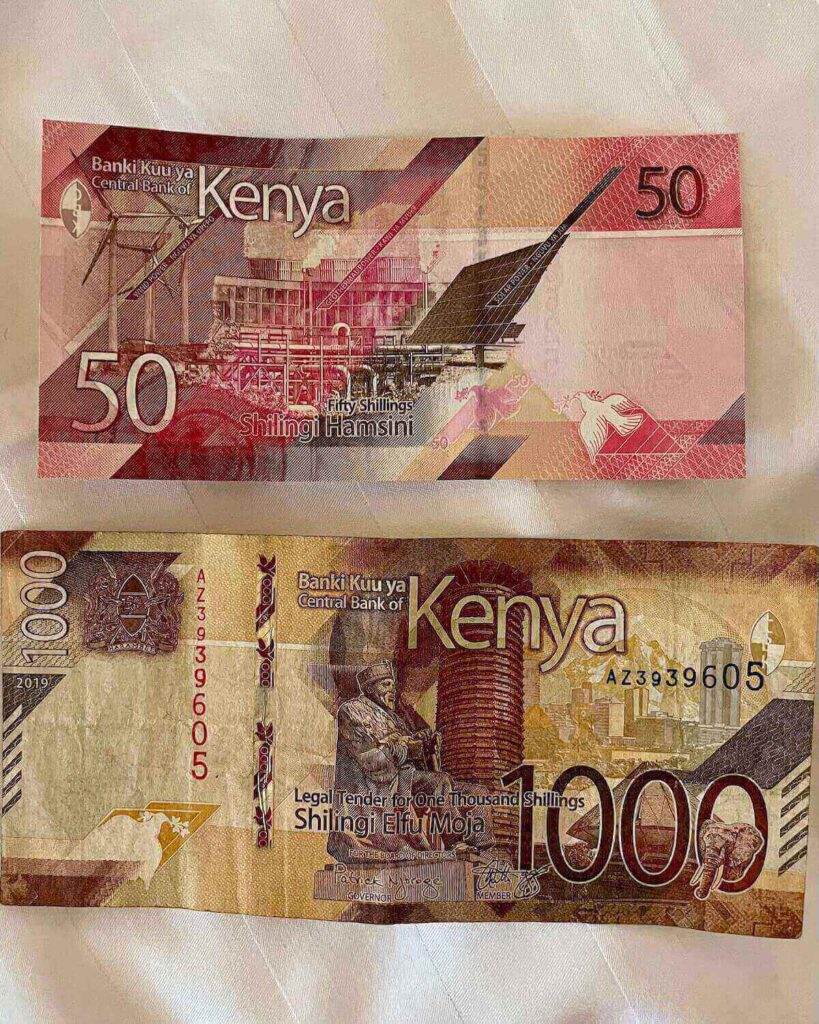
You can use USD or Kenyan Shillings (the local currency) in Kenya.
You must ensure the USD notes you bring to Kenya are dated after 2000. Some countries, such as Zambia require USD notes minted after 2007. Check the notes while you are at the desk receiving your money.
I wrongly assumed that the cash we exchanged back home would be dated correctly, and we did not realise we had several notes that were minted in the 1990s until we were in Kenya. They are very strict about accepting USD notes from after 2000.
If you are from the UK or somewhere with an unfavourable USD exchange rate, I would suggest getting plenty of Kenyan Shillings. If you purchase souvenirs or other retail items in Shillings, it may be a cheaper rate than buying souvenirs in USD.
Keep the receipt of your currency conversion because customs in Kenya may want to see it.
It is important to have many smaller USD notes, such as $5 notes.
Gratuities for Safaris
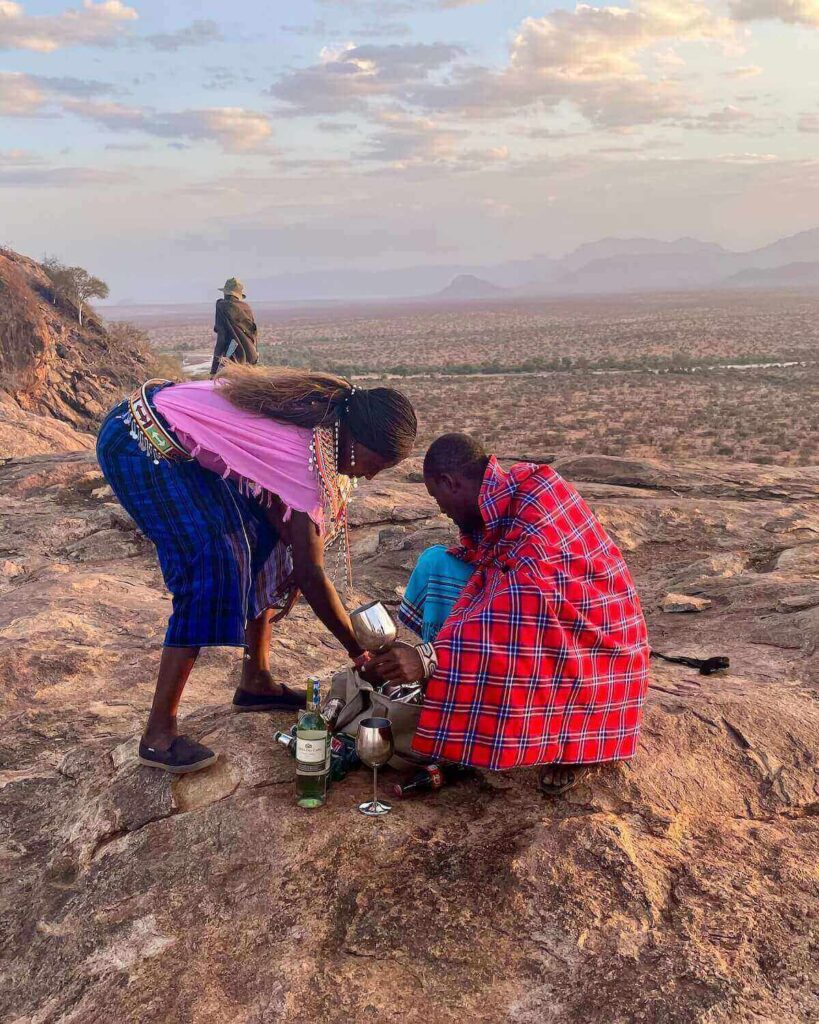
Kenya is a tipping-based country – most services expect a tip. Therefore, you will need to bring enough cash to cover this.
There are usually guidelines on how much to tip for safari lodges. For example, you should tip your driver-guide and your spotter individually, and you can give them the tip money at the end of your stay at that camp.
You can tip the rest of the staff from the lodge at the end, separately to your driver-guide and spotter.
Tipping is not limited to safari camps. At Giraffe Manor, for example, we could leave gratuities for the wider team in an envelope in the lobby. Read about my experience staying at Giraffe Manor if it is part of your itinerary, then include tips for the property’s staff when calculating how much cash to bring.
The suggested tipping amount for my safari lodges was:
- USD 15 per driver-guide per day
- USD 10 per spotter per day
- USD 25 per room per day for general staff
- USD 5 per spa treatment
In addition to cash for tipping, you should also bring some money for souvenirs.
Try to estimate the amount of cash you will need for tips, any cash payments, plus some souvenirs – then bring more than you calculated. You may experience that there are always extra people to tip than expected and plenty of opportunities for buying souvenirs.
Sometimes you can pay for items with a Visa credit card; however, many establishments will not accept a Mastercard or American Express.
What Not to Pack for Safari in Kenya

Do not bring too much makeup because it is dark at night, and you do not have much time to get ready in the mornings or evenings.
For those who usually wear make-up, I suggest getting eyelashes tinted and eyebrows laminated if you want a natural look while on safari.
Additionally, you do not need to bring formal evening outfits for dinner, even on a luxury safari. A clean change of clothes will suffice. Also, do not bring precious jewellery.
Leave your clothing with a camouflage pattern at home – it is illegal to wear this pattern in parts of East Africa.
For help choosing practical colours, layers, footwear and evening outfits, use my guide to what to wear on safari in Kenya. It covers all the clothes for safari in Kenya required, plus it discussed things to take on safari in Kenya while physically on game drives.
Some luxury safari camps provide amenities to use during your stay, which means you can cut down on some of your items to pack.
While on my Masai Mara safari, my accommodation provided hairdryers, torches/flashlights, fleece ponchos, and a reusable water bottle; therefore, I did not need to bring these items.
You should remember that plastic bags are forbidden in Kenya. So, bring reusable bags for dirty laundry and shoes.
Unless having your laptop is essential, I would advise you to leave it at home. You do not want to worry about it being stolen. Bring an iPad or tablet that you can watch films or episodes on when on planes or without a good Wi-Fi connection.
It may be better to bring a manual toothbrush and razor because you may not be able to charge your electric bathroom devices while on safari or in other hotels.
Advice for a Packing List for Kenya Safari

Do not leave packing for Kenya until the last minute because you may forget something essential.
I found that the best luggage for African safaris was a combination of my Osprey Daylite Duffle for the safari portion of the trip, combined with my Herschel Supply Co. hard-shell suitcase for the remainder of the items kept in storage. Find more advice on how to pack your suitcase for safari here.
Here is a summary of must-have items to help you remember what to pack for a safari in Kenya.

- Documents (visa, passport, vaccination records)
- Anti-diarrhoea tablets
- Cash in USD and/or Kenyan Shillings
- Duffel bag
- Long-sleeved clothing
- Plenty of underwear (the camp laundry service will not wash women’s underwear)
- Hat (baseball cap or wide-brimmed)
- Clothing in beige, khaki, grey or green (including a jacket to stay warm)
- Sports bra (ladies will appreciate this)
- Flip flops (they will come in handy to throw on after your morning game drive to go to lunch)
- Bandana (to prevent dust on the face)
FAQ
What can you not bring into Kenya?
Kenya has implemented a strict ban on single-use plastic bags. The ban is part of the government’s efforts to reduce plastic pollution and promote environmental sustainability. As a result, anyone traveling to Kenya is prohibited from bringing any plastic bags into the country, such as duty-free shopping bags.
What to pack for safari in Kenya?
Opt for soft-sided luggage like duffel bags, as they are easier to manipulate into smaller safari planes and vehicles.
Remember to pack necessary toiletries, clothing in neutral colours like beige, khaki, grey, or green. Avoid bringing plastic bags, camouflage clothing, precious jewellery, and unnecessary makeup.
What are some travel essentials in Kenya for safaris?
Binoculars, camera equipment, insect repellent, and cash in USD or Kenyan Shillings for tipping and souvenirs are essential items for an enjoyable safari in Kenya.
Plan Your Safari Outfits Next
Before you start filling your bag, decide which clothes will keep you comfortable during early starts, hot afternoons and cooler evenings. Choosing lightweight layers in practical colours will also help you pack less and stay within any luggage limits on your itinerary.
Use my guide to what to wear on safari in Kenya to plan your outfits, footwear and game-drive layers before buying any remaining items.
You can also download my packing list to make sure you don’t forget any essential items.